Evaluation of the Anti-Inflammatory activity and Phytochemical Profiling of Bougainvillea glabra Choisy Flower and Bract
Keywords:
Bougainvillea glabra, Anti-inflammatory, Anti-denaturant, Nitric oxide radica, GC-MSAbstract
Background: Bougainvillea glabra is an ornamental plant with reported ethnomedicinal uses. Its genus Bougainvillea possesses anti-inflammatory activity and its bract is rich in phenolics. No study has examined the anti-inflammatory activity of the combined flower and bract.
Methods: This study evaluated the anti-inflammatory effect of B. glabra flower and bract (both structures parts contribute to the plant's phytochemicals) and profiled their constituents via gas chromatography-mass spectrometry (GC-MS). The air-dried flower and bract were pulverised, macerated in 80% v/v ethanol, and the crude extract was partitioned with n-hexane and dichloromethane (DCM). Each fraction was evaluated for anti-inflammatory activity (antidenaturation and nitric oxide (NO) scavenging assays), and the active fractions were profiled via GCMS.
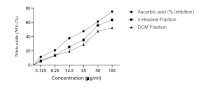
Results: The crude extract yielded 1.300%, from which the n-hexane and DCM fractions were recovered at 32.980 and 17.020%, respectively. Both fractions inhibited protein denaturation comparably to diclofenac sodium at fixed concentration (p > 0.05), while diclofenac sodium required statistically lower concentrations to achieve the same effect (IC = 0.037 ± 0.002 mg/mL; p = 0.013). 50 Both fractions exhibited NO scavenging activity comparable to ascorbic acid at fixed percentage inhibition (p > 0.05), though ascorbic acid demonstrated significantly greater potency (IC = 0.046 ± 500.001 mg/ml; p < 0.0001) than n-hexane and DCM fractions. GC-MS analysis identified twenty-nine unique compounds across both fractions, with oleic acid, 9,12-octadecadienoic acid, and nhexadecanoic acid among the dominant constituents.
Conclusion: These findings suggest that the n-hexane and DCM fractions of B. glabra flower and bract possess moderate anti-inflammatory activity, which may be associated with the identified compounds.
References
1. Oronsky B, Caroen S and Reid T (2022) What exactly is inflammation (and what is it not?). International Journal of Molecular Sciences, 23 (23):14905. https://doi.org/10.3390/ijms232314905
2. Medzhitov R (2021) The spectrum of inflammatory responses. Science, 374 (6571):1070–1075. https://doi.org/10.1126/science.abi5200
3. Lin XM, Chen AJ, Zhang HM, Kuang YY, Chen R, Wu MD, Chen J, Ma X, Zhao L, Xing Y and Ni H (2025) Anti-inflammatory activity and mechanism of stearic acid extract from purslane. Food Science and Nutrition, 13 (7):e70596. https://doi.org/10.1002/fsn3.70596
4. Badraoui R, Alrashedi MM, El-May MV and Barrdakci F (2021) Acute respiratory distress syndrome: A life-threatening associated complication of SARS-CoV-2 infection inducing COVID-19. Journal of Biomolecular Structure and Dynamics, 39 (17):6842–6851. https://doi.org/10.1080/07391102.2020.1803139
5. Guo Z and Fan D (2025) Editorial: The role of inflammation in organ injury. Frontiers in Immunology, 16:1–3. https://doi.org/10.3389/fimmu.2025.1717035
6. Harvanova G and Duranková S (2025) Inflammatory process: Factors inducing inflammation, forms and manifestations of inflammation, immunological significance of the inflammatory reaction. Alergologia Polska – Polish Journal of Allergology, 12 (1):54–61. https://doi.org/10.5114/pja.2025.147674
7. Margina D, Ungurianu A, Purdel C, Tsoukalas D, Sarandi E, Thanasoula M, Tekos F, Mesnage R, Kouretas D and Tsatsakis A (2020) Chronic inflammation in the context of everyday life: Dietary changes as mitigating factors. International Journal of Environmental Research and Public Health, 17 (11):4135. https://doi.org/10.3390/ijerph17114135
8. Gusev E and Zhuravleva Y (2022) Inflammation: A new look at an old problem. International Journal of Molecular Sciences, 23 (9):4596. https://doi.org/10.3390/ijms23094596
9. Giri SS, Kim SG, Woo KJ, Jung WJ, Lee SB, Lee YM, Jo SJ, Hwang MH, Park J, Kim JH, Sukumaran V and Park SC (2023) Effects of Bougainvillea glabra leaf on growth, skin mucosal immune responses, and disease resistance in common carp Cyprinus carpio. Fish & Shellfish Immunology, 132:108514. https://doi.org/10.1016/j.fsi.2022.108514
10. Saleem H, Usman A, Mahomoodally MF and Ahemad N (2021) Bougainvillea glabra (Choisy): A comprehensive review on botany, traditional uses, phytochemistry, pharmacology and toxicity. Journal of Ethnopharmacology, 266:113356. https://doi.org/10.1016/j.jep.2020.113356
11. Bautista MAC, Zheng Y, Boufford DE, Hu Z, Deng Y and Chen T (2022) Phylogeny and taxonomic synopsis of the genus Bougainvillea (Nyctaginaceae). Plants, 11 (13):1–20. https://doi.org/10.3390/plants11131700
12. Ornelas García IG, Guerrero Barrera AL, Avelar González FJ, Chávez Vela NA and Gutiérrez Montiel D (2023) Bougainvillea glabra Choisy (Nyctaginaceae): Review of phytochemistry and antimicrobial potential. Frontiers in Chemistry, 11:1276514. https://doi.org/10.3389/fchem.2023.1276514
13. Ogunwande IA, Avoseh ON, Olasunkanmi KN, Lawal OA, Ascrizzi R and Flamini G (2019) Chemical composition, anti-nociceptive and anti-inflammatory activities of essential oil of Bougainvillea glabra. Journal of Ethnopharmacology, 232:188–192. https://doi.org/10.1016/j.jep.2018.12.017
14. Manivannan E, Kothai R, Arul B and Rajaram S (2012) Anti-inflammatory activity of Bougainvillea spectabilis Linn. Research Journal of Pharmaceutical, Biological and Chemical Sciences, 3 (1):642–646.
15. Mandal G, Chatterjee C and Chatterjee M (2015) Evaluation of anti-inflammatory activity of methanolic extract of leaves of Bougainvillea spectabilis in experimental animal models. Pharmacognosy Research, 7 (1):18–22. https://doi.org/10.4103/0974-8490.147194
16. Markandan S, Abdullah A, Musa KH, Subramaniam V and Stockham K (2016) Determination of antioxidant activities, total phenolic and flavonoid contents in Bougainvillea glabra bracts at various methanol concentrations. AIP Conference Proceedings, 1784 (1):030038. https://doi.org/10.1063/1.4966776
17. El Mannoubi I (2023) Impact of different solvents on extraction yield, phenolic composition, in vitro antioxidant and antibacterial activities of deseeded Opuntia stricta fruit. Journal of Umm Al-Qura University for Applied Sciences, 9:176–184. https://doi.org/10.1007/s43994-023-00031-y
18. Cheng Y, Kang Y and Kim W (2025) Solvent fractionation of Polygonum cuspidatum Sieb. et Zucc. for antioxidant, biological activity, and chromatographic characterization. International Journal of Molecular Sciences, 26 (14):7011. https://doi.org/10.3390/ijms26147011
19. Imtiaz F, Ahmed D, Mohammed OA, Younas U and Iqbal M (2025) Optimized recovery of phenolic and flavonoid compounds from medicinal plant extracts for enhanced antioxidant activity: A mixture design approach. Results in Chemistry, 13:101960. https://doi.org/10.1016/j.rechem.2024.101960
20. Akinpelu BA, Godwin A, Aderogba MA, Makinde AM, Azeez SO and Oziegbe M (2018) Evaluation of anti-inflammatory and genotoxicity potential of the fractions of Archidium ohiense (Schimp. ex Müll.) extract. Ife Journal of Science, 20 (3):487–495. https://doi.org/10.4314/ijs.v20i3.3
21. Green LC, Wagner DA, Glogowski J, Skipper PL, Wishnok JS and Tannenbaum SR (1982) Analysis of nitrate, nitrite and 15N in biological fluids. Analytical Biochemistry, 126:131–138. https://doi.org/10.1016/0003-2697(82)90118-X
22. Marcocci L, Maguire JJ, Droy-Lefaix MT and Packer L (1994) The nitric oxide scavenging property of Ginkgo biloba extract EGb 761. Biochemical and Biophysical Research Communications, 201:746–755. https://doi.org/10.1006/bbrc.1994.1764
23. Muzahid AA, Sharmin S, Hossain MS, Ahamed KU, Ahmed N, Yeasmin MS, Ahmed NU, Saha BK, Rana GMM, Maitra B and Bhuiyan MNH (2023) Analysis of bioactive compounds present in different crude extracts of Benincasa hispida and Cucurbita moschata seeds by gas chromatography-mass spectrometry. Heliyon, 9 (1):e12702. https://doi.org/10.1016/j.heliyon.2022.e12702
24. Lezoul NEH, Belkadi M, Habibi F and Guillén F (2020) Extraction processes with several solvents on total bioactive compounds in different organs of three medicinal plants. Molecules, 25 (20):4672. https://doi.org/10.3390/molecules25204672
25. Delica KM, Balagot KWM and Lapuz RB (2023) Investigation of chemical components of hexane extract from the stem of Arcangelisia flava via phytochemical test, GC-MS analysis, FT-IR fingerprinting, and in vitro antioxidant activity. Philippine Journal of Science, 152 (5):1919–1929. https://doi.org/10.56899/152.05.32
26. Zhao Q, Zhu L, Wang S, Gao Y and Jin F (2022) Molecular mechanism of the anti-inflammatory effects of plant essential oils: A systematic review. Journal of Ethnopharmacology, 301:115829. https://doi.org/10.1016/j.jep.2022.115829
27. Compaoré M, Bakasso S, Meda RNT and Nacoulma OG (2018) Antioxidant and anti-inflammatory activities of fractions from Bidens engleri O.E. Schulz (Asteraceae) and Boerhavia erecta L. (Nyctaginaceae). Medicines, 5 (2):53. https://doi.org/10.3390/medicines5020053
28. Bailey-Shaw YA, Williams LAD, Green CE, Rodney S and Smith AM (2017) In-vitro evaluation of the anti-inflammatory potential of selected Jamaican plant extracts using the bovine serum albumin protein denaturation assay. International Journal of Pharmaceutical Sciences Review and Research, 47 (1):145–153. https://globalresearchonline.net/journalcontents/v47-1/27.pdf
29. Esho B, Samuel B, Akinwunmi K and Oluyemi W (2021) Membrane stabilization and inhibition of protein denaturation as mechanisms of the anti-inflammatory activity of some plant species. Trends in Pharmaceutical Sciences, 7 (4):269–278. https://doi.org/10.30476/tips.2021.93160.1118
30. Ogundele SB, Olorunmola FO and Agbedahunsi JM (2022) Comparative in vitro radical scavenging and erythrocyte membrane stabilizing activities of extracts and partitioned fractions of Artocarpus altilis stem bark and Senna alata leaf. Journal of Pharmacognosy and Phytochemistry, 11 (3):46–54. https://www.phytojournal.com/archives/2022/vol11issue3/PartA/11-3-8-865.pdf
31. Lalitharani S, Mohan VR, Regini GS and Kalidass C (2009) GC-MS analysis of ethanolic extract of Pothos scandens leaf. Journal of Herbal Medicine and Toxicology, 3 (1):159–160.
32. Saeed NM, El-Demerdash E, Abdel-Rahman HM, Algandaby MM, Al-Abbasi FA and Abdel-Naim AB (2012) Anti-inflammatory activity of methyl palmitate and ethyl palmitate in different experimental rat models. Toxicology and Applied Pharmacology, 264 (1):84–93. https://doi.org/10.1016/j.taap.2012.07.020
33. Santa-María C, López-Enríquez S, Montserrat-de la Paz S, Geniz I, Reyes-Quiroz ME, Moreno M, Palomares F, Sobrino F and Alba G (2023) Update on anti-inflammatory molecular mechanisms induced by oleic acid. Nutrients, 15 (1):224. https://doi.org/10.3390/nu15010224
34. Huang L, Kim MY and Cho JY (2023) Immunopharmacological activities of luteolin in chronic diseases. International Journal of Molecular Sciences, 24 (3):2136. https://doi.org/10.3390/ijms24032136
Downloads
Published
How to Cite
Issue
Section
License

This work is licensed under a Creative Commons Attribution-NonCommercial 4.0 International License.